Radiators stay cold while the boiler runs because of trapped air, a closed or stuck valve, a failed zone valve or circulator, or a blocked steam vent. Hot water and steam systems fail in different ways. Bleed hot water radiators, never steam ones. Call a pro if several radiators are cold or pressure keeps dropping.
The boiler is running. You can hear it, and the basement feels warm. Then you walk upstairs and one radiator is ice cold while the one next to it is almost too hot to touch. It feels like the heat is picking favorites.
It is not random. When some radiators stay cold with the boiler running, the boiler is usually doing its job. The problem sits somewhere between the boiler and the radiator. Air can block the flow. A valve can be shut. A pump can stall. On a steam system, one small vent can stay closed.
The fix depends on one question: do you have a hot water system or a steam system? The two fail in different ways, and a fix that works on one can cause damage on the other. Bleeding a steam radiator, for example, does nothing useful.
This guide helps you work out which system you have, what the pattern of cold radiators tells you, and which checks are safe to try yourself. It also shows when to stop and call for boiler repair. Dees Plumbing and Heating provides boiler service in Dracut and nearby towns, and the steps below follow the order a technician would use.
First, Find Out Which System You Have
Count the pipes connected to a radiator. One pipe usually means steam. Two pipes can mean either steam or hot water, so look for other clues.
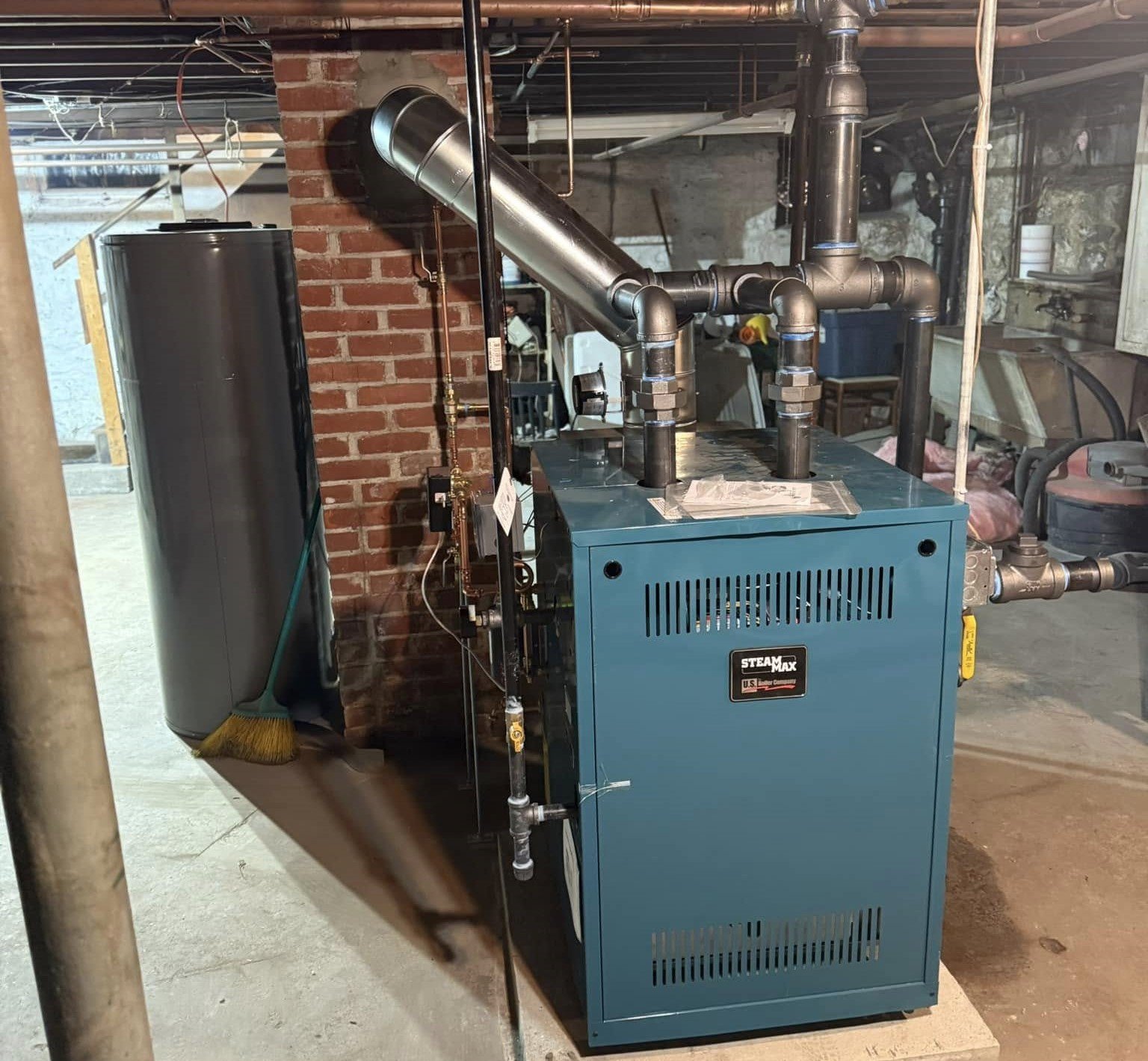
Hot water radiators have a small bleed valve near the top. The boiler feeds them through a closed loop, and a circulator pump pushes the water around. Steam radiators have a small air vent instead, usually on the last section of the radiator. A glass tube on the boiler that shows the water level is another sign of steam.
What the Pattern of Cold Radiators Tells You
Where the cold spots are tells you more than the cold itself. Note the pattern before you touch anything.
- One radiator cold, the rest hot: Likely trapped air in that radiator (hot water), or a stuck vent (steam).
- Top cold, bottom hot: Air has collected at the top of a hot water radiator.
- Whole radiator cold with the valve open: Water or steam is not reaching it. A stuck valve or a blockage is the usual cause.
- Upstairs radiators cold, downstairs hot: Air in the system, or flow that favors the lower floors.
- A whole zone cold: A failed zone valve, a dead circulator, or air in that loop.
- Every radiator cold while the boiler runs: Check that the burner is really firing and the circulator is running.
Hot Water Radiators: Air Is the Usual Cause
Air is lighter than water, so it rises and settles at the top of a radiator. Once a pocket forms, it blocks the hot water from filling the radiator. Bleeding the radiator lets the air out so water can take its place.
Do it in this order:
- Turn the thermostat down so the circulator stops, and let the radiator cool.
- Start with the highest radiator in the house, then work downward.
- Hold a cup and a rag under the bleed valve. Turn the valve slowly counterclockwise with a radiator key or flat screwdriver.
- Listen for a hiss. When a steady stream of water replaces the hiss, close the valve.
- Check the boiler pressure gauge when you finish.
Do not force a valve that will not turn. A stuck valve may already be leaking, and it needs replacing, not pushing. Hot water can also squirt, so wear gloves.
Bleeding removes water from a closed system, so pressure drops. Many home systems sit near 12 psi when cold, but your manual gives the right number for your boiler. Do not add water unless you know how your system works, because overfilling can open the relief valve and hide a real problem.
If you have to bleed the same radiators again and again, air is getting in from somewhere. A leak, a failing expansion tank, or a fill problem is the usual cause. That is a technician’s job.
Steam Radiators: The Vent Does the Work
Do not bleed a steam radiator. Steam pushes air out through vents, and a vent that is stuck shut keeps steam from filling the radiator. The result is a radiator that stays cold or heats late.
The U.S. Department of Energy’s Building America research on steam heating found that steam distribution depends on the condition of the radiator air vents. It also found that blocked or failing vents can be replaced to even out heating.
A few safe checks come first:
- The radiator valve: On a one-pipe radiator, the valve should be fully open or fully shut. A half-open valve causes banging and spitting.
- The vent: When the radiator heats, you should hear air hiss out of the vent. A vent that stays silent and cold may be clogged.
- The pitch: The radiator should tilt slightly toward the pipe so water can drain back.
Let everything cool before you touch a vent. Steam burns. Do not raise the boiler pressure to force heat into the radiator either. Higher pressure can keep vents closed and trap the air you want out.
Also look at the glass tube on the boiler. An empty tube, or water that surges up and down, is a reason to call right away.
Causes That Need a Technician
Some cold radiators come from parts you cannot safely reach. Call for help if you suspect any of these:
- A failed zone valve: A whole zone stays cold while the rest of the house heats.
- A weak or dead circulator: The boiler gets hot, but the pipes after the pump stay cool.
- Sludge or debris: Brown, dirty water comes out when you bleed a radiator.
- Poor balance: Upstairs radiators run cold because the water favors the lower floors.
- Pressure swings: The relief valve opens, or pressure drops again after you bleed.
If several radiators are still cold even with the valves open and the air out, the cause is almost never a single radiator. And if every radiator is cold because of a boiler that will not start, the checks for that problem come first.
When Cold Radiators Become an Emergency
Leave the house and call 911 from outside if you smell gas or oil, see smoke, or hear a carbon monoxide alarm. Do not try to fix anything first.
Call right away if water is leaking from the boiler, the relief valve keeps discharging, or the house is getting too cold to stay in. This matters most when someone at home is young, elderly, or unwell. Dees Plumbing and Heating handles emergency heating repairs around Dracut, so you do not have to wait for the next business day.
Notes to Take Before You Call
A few details help a technician find the problem faster:
- Whether you have one-pipe or two-pipe radiators
- Which radiators are cold, and on which floor
- Whether the cold radiators changed after bleeding
- The pressure gauge reading
- Photos of the boiler and the cold radiator valve
Keep Radiators Heating Evenly All Winter
Most cold radiator calls trace back to small problems that built up over the season. Regular heating system maintenance catches stuck valves, weak pumps, and worn vents before the first cold week.
You can help too. Bleed hot water radiators at the start of the heating season. Keep furniture and heavy covers off the radiators so the heat can leave them. Watch the pressure gauge now and then, and write down any change.
Get Help With Cold Radiators in Dracut
If your radiators are still cold after the safe checks, stop and call. Waiting rarely helps, because small flow problems tend to get worse as the weather turns colder. Dees Plumbing and Heating is a heating contractor in Dracut, MA that can look at your boiler and heating system. Request a boiler service visit and get the heat back where you need it.
FAQs
Why are some of my radiators cold while others are hot?
The most common cause is trapped air in a hot water radiator or a stuck vent on a steam radiator. A closed valve, a failed zone valve, or a weak circulator can also leave some radiators cold while others heat normally.
Can I bleed a steam radiator?
No. Steam radiators release air through a vent, not a bleed valve. If a steam radiator stays cold, check that its valve is fully open and that the vent is not clogged. Call a technician if neither helps.
Why is the top of my radiator cold and the bottom hot?
That pattern usually means air is trapped at the top of a hot water radiator. Turn the thermostat down, let the radiator cool, and bleed it. Then check the boiler pressure gauge.
How do I know if I have steam or hot water radiators?
Count the pipes on a radiator. One pipe usually means steam. Hot water radiators have a bleed valve near the top, while steam radiators have an air vent. A water-level glass on the boiler also points to steam.