Furnace short cycling means the furnace starts and shuts off before a normal heating cycle ends. The usual causes are a dirty filter, blocked vents, a thermostat in the wrong spot, a dirty flame sensor, or a furnace that is too big. Replace the filter first. Call a technician if it keeps happening.
You hear the furnace kick on. Two minutes later, it clicks off. A few minutes after that, it starts again. The house never quite warms up, and the sound of the burner starting becomes something you dread.
That pattern is called furnace short cycling, and it is one of the most common heating complaints in cold weather. It is also easy to misread. Many homeowners assume the furnace is broken. Often, the furnace is protecting itself. A safety control senses a problem, shuts the burner down, and tries again.
That is useful to know, because the cause is often simple. A dirty filter, a closed vent, or a thermostat on the wrong wall can all do it. Other causes need a technician, such as a dirty flame sensor or a blocked vent pipe.
This guide explains what normal furnace cycles look like, why a furnace shuts off early, and which checks you can do safely in about fifteen minutes. It also covers when to stop and call for furnace repair. Dees Plumbing and Heating provides heating service in Dracut, MA and nearby towns, and the advice below follows the order a technician would use.
What Short Cycling Is and What Normal Looks Like
A furnace should run until the house reaches the temperature on the thermostat. Then it shuts off and waits. Short cycling means it stops long before that point.
On a cool day, a furnace often runs about ten to fifteen minutes at a time. Runs are shorter and less frequent in mild weather, and longer in deep cold. Runs of three to five minutes that repeat back to back point to a problem. Time a few cycles with your phone before you decide.
Why a Furnace Shuts Itself Off Early
Most furnaces have several safety controls. The high-limit switch shuts the burner off if the furnace gets too hot. The flame sensor shuts off the gas if it cannot confirm a flame. On many models, a pressure switch checks that exhaust is moving before the burner runs.
When one of these controls trips, the furnace stops, waits, and tries again. That loop looks like short cycling. The control is not the problem. It is reporting one, so the useful question is what it is reacting to.
Restricted Airflow: A Common Culprit
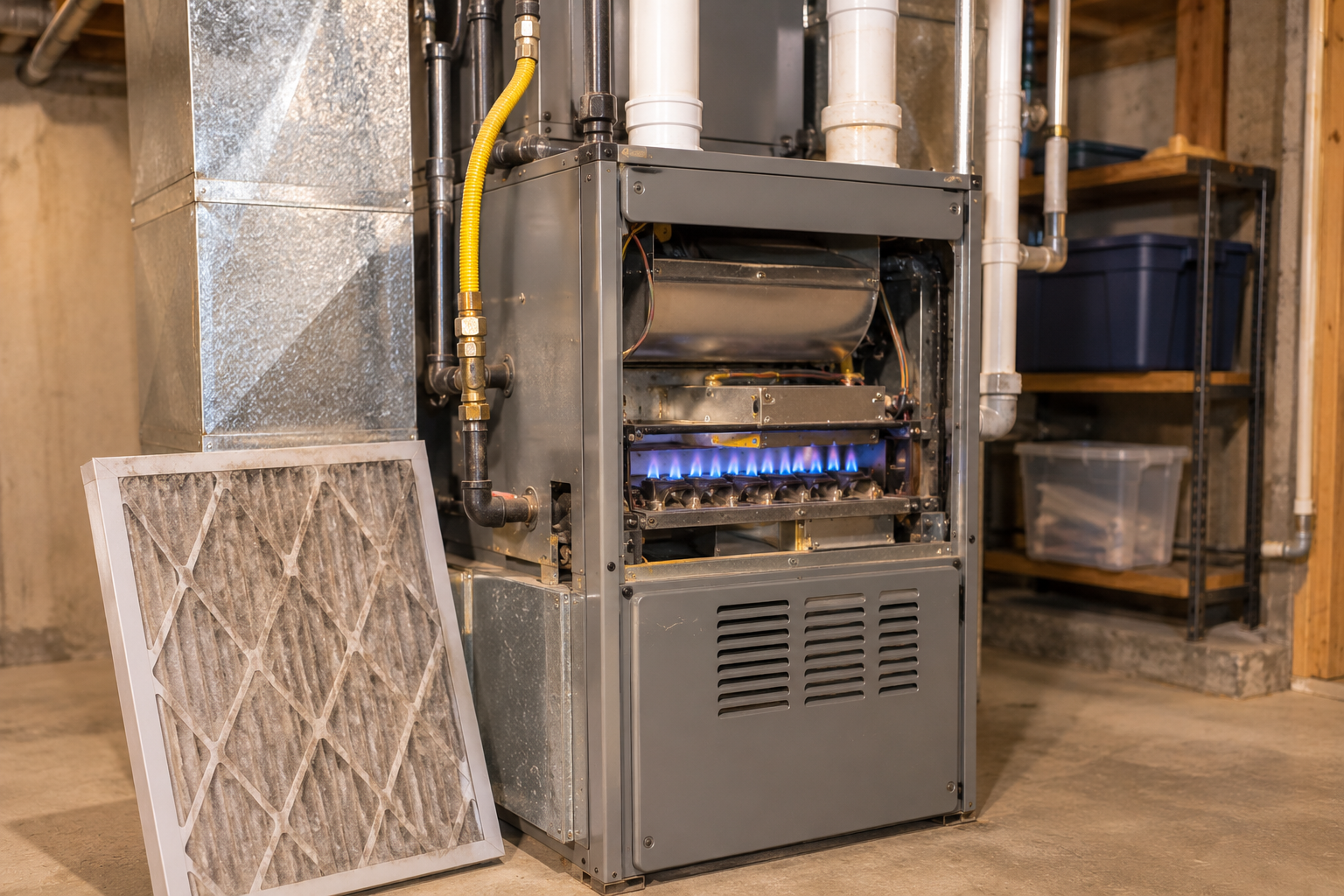
A dirty filter is one of the most common causes. When air cannot move through the filter, heat builds up inside the furnace. The high-limit switch trips and the burner shuts off. Once things cool down, it starts again.
Blocked or closed registers do the same thing. Furniture, rugs, and shut vents all choke the airflow your furnace needs.
Pull the filter out and hold it up to a light. If you cannot see light through it, replace it with the right size. ENERGY STAR recommends inspecting, cleaning, or changing furnace air filters once a month during the heating season. Then walk through the house and open every supply register.
Thermostat Problems That Look Like Furnace Problems
Sometimes the furnace is fine and the thermostat is fooling it. A thermostat can read warm because it sits above a register, in direct sun, or near a lamp. It tells the furnace the house is warm, the furnace shuts off, and the rest of the house stays cold.
Check three things. Replace the batteries if the thermostat uses them. Look at where it hangs and what is near it. Confirm that the mode is set to heat, the fan is on auto, and no hold or schedule is overriding your setting. If the cycling continues, a technician can test the wiring and the thermostat itself.
The Burner Lights, Then Quits: Flame Sensor and Venting
If the burner lights, runs for a few seconds, and shuts off, suspect the flame sensor. This small rod sits in the flame and confirms that gas is burning. When it gets coated with residue, it cannot sense the flame, so the furnace shuts off the gas. Cleaning it is a routine heating furnace repair, but it means opening the furnace, so leave it to a technician.
Venting matters too. High-efficiency furnaces send exhaust through plastic pipes to the outside. Snow, ice, leaves, or a nest can block the outdoor opening. A clogged condensate drain can also trip a safety switch. Clear snow or debris from around the outdoor vent by hand. Never push tools into the pipe.
When the Furnace Is Too Big for the House
An oversized furnace heats the house too fast, reaches the set temperature, and shuts off. Then it repeats. You notice it most in mild weather. This is a sizing problem, not a part that has failed, and no filter change fixes it.
A technician can look at the controls and the ductwork to see what can be adjusted. If the furnace is old as well as oversized, they can also help you weigh a repair against furnace replacement.
Is Short Cycling Serious?
It is rarely an emergency on its own, but you should not ignore it. Every start puts wear on the igniter, the blower, and other parts, and a furnace that cannot finish a cycle works harder to heat your home. Some causes, such as a blocked vent, can affect safety.
Short cycling is also often one of several warning signs of a failing furnace, along with strange noises and uneven heat. If you see more than one, call sooner.
A Fifteen-Minute Check You Can Do Safely
Do these in order. Stop at any sign of gas, flame trouble, or wiring problems.
- Time three or four cycles and write the run times down.
- Check the filter and replace it if it is dirty.
- Open every supply register and clear anything blocking a return.
- Check the thermostat’s batteries, location, and settings.
- Look at the outdoor vent openings and clear snow or debris by hand.
- Watch one full start-up and note any flashing light codes on the furnace.
Do not open the burner compartment, touch wiring, or relight anything. Those jobs belong to a technician.
When to Call for Furnace Repair
Call a technician if the cycling continues after the checks above. Call sooner if you notice any of these:
- The burner lights and shuts off within seconds
- A flashing light code or a repeated lockout
- Water around the furnace
- A burning smell or a breaker that trips again after you reset it
- A house that cannot hold its temperature
If you smell gas or a carbon monoxide alarm sounds, leave the house and call 911 from outside. For a furnace that has stopped heating on a cold night, Dees Plumbing and Heating handles emergency heating repairs in Dracut and the surrounding area.
How to Keep It From Coming Back
Most short cycling starts with small problems that go unnoticed. Change the filter on schedule, keep registers open, and clear the outdoor vents after a storm. Schedule annual furnace service before the heating season, so a technician can clean the sensor, check the safety controls, and catch worn parts early.
Furnace Cycling Too Often? Get It Looked At
A furnace that keeps turning on and off is asking for attention, not a reset. Start with the filter and the thermostat. If the cycling continues, Dees Plumbing and Heating is a heating company in Dracut, MA that can find the cause. Book a furnace diagnosis and get steady heat back before the next cold snap.
FAQs
How long should a furnace run before it shuts off?
On a cool day, a furnace often runs about ten to fifteen minutes per cycle. Runs of three to five minutes that repeat back to back suggest short cycling. Mild weather shortens normal runs, so judge it on a cold day.
Can a dirty air filter cause furnace short cycling?
Yes. A dirty filter restricts airflow, the furnace overheats, and the high-limit switch shuts the burner off. Replacing the filter is the first fix to try.
Why does my furnace turn on, run for a few seconds, and shut off?
That pattern often points to a dirty flame sensor, which cannot confirm the flame and shuts off the gas. A technician can clean or replace the sensor.
Is it safe to keep using a furnace that short cycles?
A short stretch of cycling while you check the filter is low risk. If it continues, call a technician. Leave the house if you smell gas or a carbon monoxide alarm sounds.