A sewer backup is one of the most stressful things that can happen in a home, and it’s not something to handle the way you’d handle a normal spill or clog. Wastewater backing up through a drain, toilet, or floor drain carries bacteria, viruses, and other contaminants, which means the first few minutes matter for your safety, not just your floors.
Dees Plumbing and Heating provides residential plumbing services across Dracut and Middlesex County, including response to sewer backup calls, and this guide covers exactly what to do right now, what typically causes a backup, and when it’s time to stop troubleshooting and call a plumber.
Is It Safe to Stay in Your Home During a Sewer Backup?
In most cases, yes, but you should stay out of the affected area. Sewage is classified as contaminated water, and direct contact can cause gastrointestinal illness, skin irritation, and other health problems. If the backup is contained to one bathroom or a basement floor drain, the rest of the home is generally safe. If sewage has spread across multiple rooms or reached electrical outlets, leave the affected area and treat it as unsafe until a professional has assessed it.
What to Do Right Now If You Have a Sewer Backup
The first priority is stopping the situation from getting worse, not cleaning it up.
- Stop using water in the home. Running faucets, flushing toilets, or running the dishwasher or washing machine can push more wastewater back into the house.
- Keep people and pets out of the affected area entirely.
- If the backup is near an electrical outlet or appliance, avoid that area and don’t touch anything electrical nearby.
- Open windows if possible to ventilate the space.
- Call a licensed plumber. This isn’t a situation to wait out overnight.
What Causes Sewer Backups in Dracut Homes?
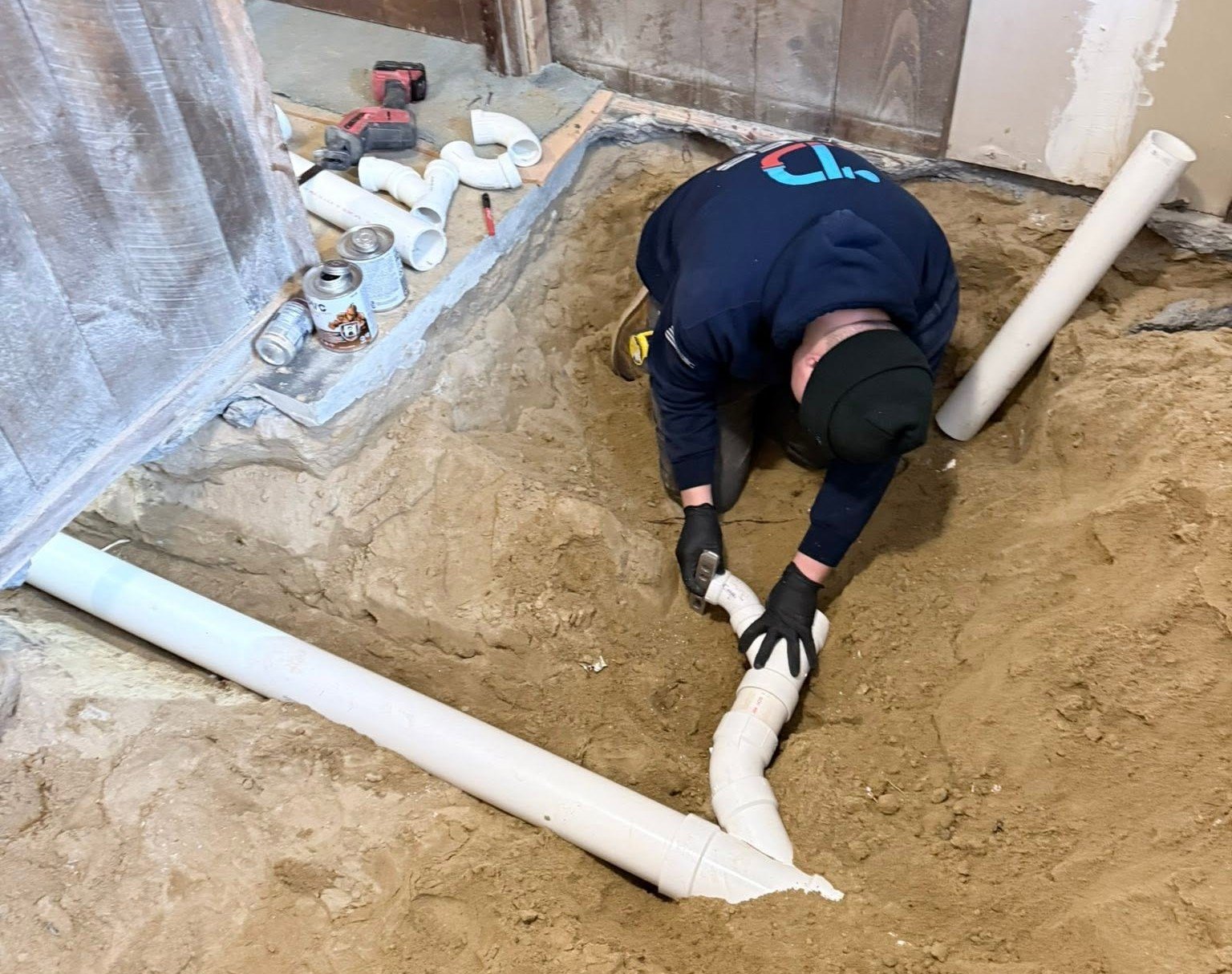
Sewer backups usually trace back to a blockage or failure somewhere between the house and the municipal sewer main. Tree root intrusion is one of the most common causes in older neighborhoods, where roots grow into aging clay or cast iron pipe joints and gradually block flow. Grease, wipes, and other debris flushed or poured down drains can also build up over time and cause a clog in the main line.
Aging or damaged pipe is another common factor, especially in homes with original sewer laterals that haven’t been inspected in years. Heavy rain can occasionally overwhelm municipal systems too, though a backup limited to one property is more often a sign of a blockage or damaged pipe on the homeowner’s side of the connection.
DIY Sewer Backup Cleanup: Why It’s Not Recommended
Sewage cleanup isn’t a typical DIY project, and it’s worth understanding why. Wastewater carries bacteria and pathogens that regular household cleaning products aren’t designed to fully address, and porous materials like carpet, insulation, and drywall that get saturated often need to be removed rather than cleaned. The CDC’s guidance on cleaning safely after contamination recommends protective equipment like gloves, goggles, and a respirator, along with discarding materials that can’t be adequately disinfected, which reflects how seriously this type of contamination should be treated.
Beyond the health risk, cleaning up the visible mess doesn’t fix the underlying blockage or pipe issue. Without addressing the cause, the backup is likely to happen again.
When to Call a Plumber for a Sewer Backup
Call a plumber as soon as you notice a backup, rather than waiting to see if it resolves on its own. Multiple drains backing up at the same time, especially the lowest drain in the house like a basement floor drain, is usually a sign of a main line blockage rather than a single clogged fixture, and that’s a job for a professional with the right equipment to clear the line safely.
Dees Plumbing and Heating provides 24/7 emergency plumbing for sewer backups and other urgent plumbing issues throughout Dracut and Middlesex County. Dees Plumbing and Heating is a licensed plumbing contractor serving Dracut and nearby Massachusetts communities .
Had a Sewer Backup? Get the Line Inspected Before It Happens Again
A sewer backup is stressful enough the first time. If you’ve dealt with one, or you want to catch a developing problem before it becomes an emergency, routine sewer line inspections can identify root intrusion, cracks, or blockages before they cause another backup. Contact Dees Plumbing and Heating today to schedule an inspection or get help with an active sewer backup.
FAQs
Is it safe to shower or flush the toilet during a sewer backup?
No. Running any water in the home, including flushing toilets or showering, can push more wastewater back into the house and make the backup worse.
How do I know if a sewer backup is a main line problem?
If multiple drains back up at the same time, especially the lowest drain in the house like a basement floor drain, it’s usually a sign of a main line blockage rather than a single clogged fixture.
Should I clean up a sewer backup myself?
It’s not recommended. Sewage contains bacteria and pathogens that require protective equipment and proper disposal of contaminated materials, and cleaning the mess doesn’t fix the underlying blockage.
What are the most common causes of sewer backups?
Tree root intrusion, grease and debris buildup, and aging or damaged pipe are the most common causes, particularly in homes with older sewer laterals that haven’t been inspected recently.